Ultra-Minimally Invasive Spine Surgery Gives Patient Her Life Back
Debbi is pain-free and back to doing the things she loves.
3 minutes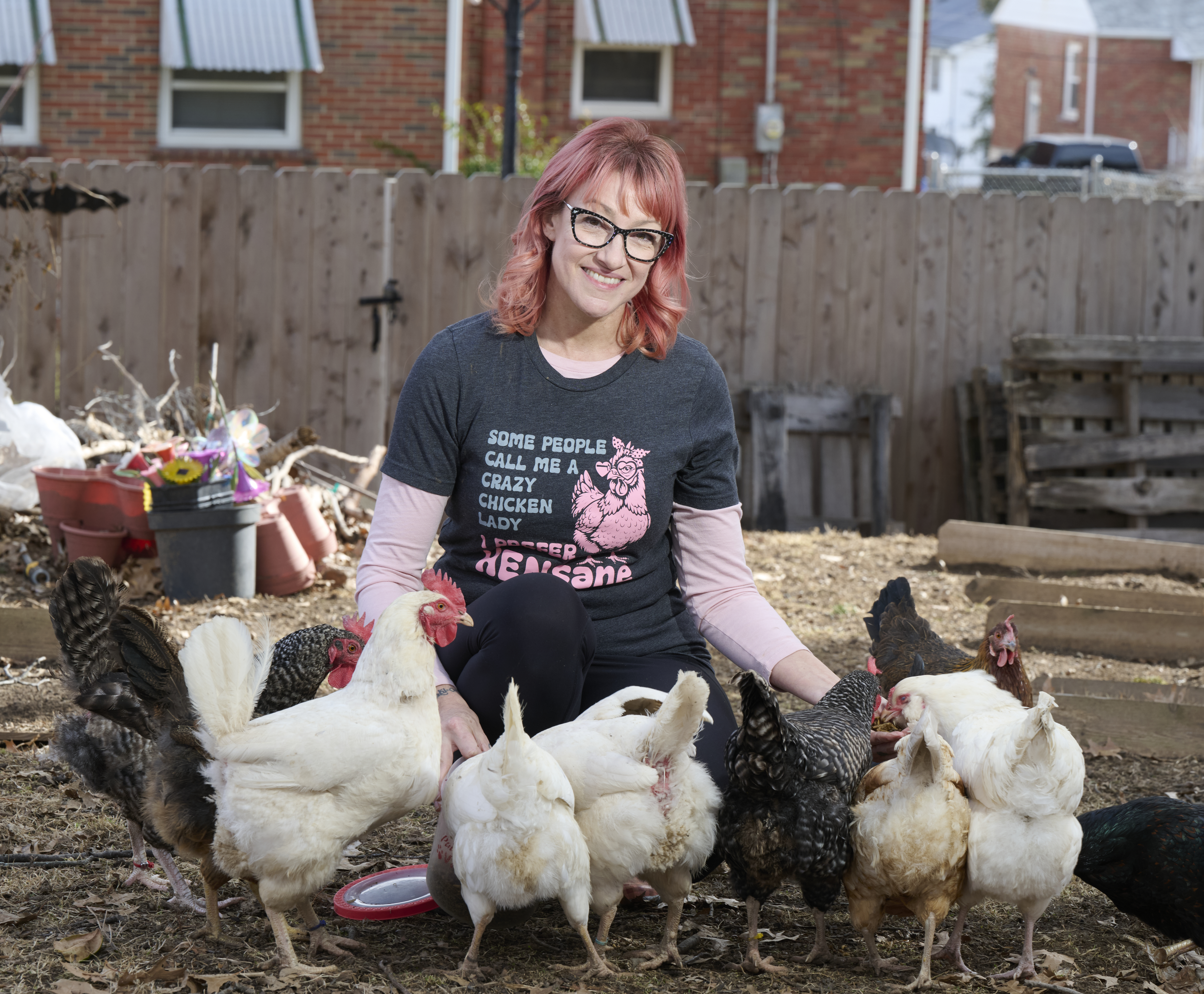
Debbi Jesse, 51, is outside mowing her lawn, an activity she couldn’t do prior to her ultra-minimally invasive—also known as endoscopic—spine surgery at Barnes-Jewish West County Hospital. For years, Debbi had been in pain, which ranged from stabbing to sharp to shooting throughout most of the lower half of her body, including her back, hips, and glutes.
“It was really miserable,” she says. “I was an active person—I mow yards, have chickens, have a large garden, run. I couldn’t do any of that because I was in too much pain.”
However, it was severe pain in her right leg that led Debbi, who lives in St. Louis County, to seek surgery last year. It turned out that she had a cyst on her spine that was pressing into a nerve, and she also had a bulging disk in her back, which exacerbated the pain.
A referral to John Ogunlade, DO, a WashU Medicine neurosurgeon at Barnes-Jewish West County Hospital, changed everything.
A focused, targeted surgery to alleviate pain
From her first meeting with Dr. Ogunlade, Debbi was impressed. The surgeon came to WashU Medicine to develop the endoscopic spine surgery program at BJC HealthCare, which has since grown to include five surgeons—made up of a collaborative team of neurosurgeons and orthopedic surgeons—who perform more than 300 procedures a year, making it one of the largest and most experienced programs nationwide.
“Dr. Ogunlade seemed really bright and very skilled,” Debbi says. He recommended a surgery to decompress her spine, and when he told her he’d be able to perform it through a pinhole, that it would only require a 7-milimeter incision, and that it would be an outpatient procedure, Debbi was amazed. “When he told me how minimally invasive it was, that blew my mind,” she says.
Endoscopic spine surgery uses a tool called a spinal endoscope, a long tube with an integrated camera and light attached to the end, to help the surgeon see inside the body without making a large incision. Specialized instruments are inserted through the spinal endoscope to decompress nerves and the spinal cord.
“It’s different than traditional surgery in that we are using natural openings of the spine that already exist,” Dr. Ogunlade says. “We essentially widen those openings using the endoscope, which allows us to decompress the nerve structure without significant trauma to non-diseased anatomy. It’s a very focused and targeted surgery.”
It’s important to Dr. Ogunlade that patients understand their pathology, their imaging, and the reason for performing a surgery. “I let them know that endoscopic surgery—the least invasive tool in our team’s toolbox—offers a quicker recovery and an improvement in symptoms, with a quicker return to work,” he says.
Undergoing endoscopic decompression surgery

In May 2024, Debbi had endoscopic decompression surgery with Dr. Ogunlade, which was a success.
“By the time I was home that evening, the pain was gone,” Debbi says. “I didn’t use painkillers, no hot pack or cold pack—there was just no pain.”
Dr. Ogunlade stayed connected to Debbi following the surgery.
“He didn’t care if I had the silliest questions,” Debbi says. “He was there, and I was really impressed by that on a personal level, that he was concerned and willing to be there for me.”
Today, months after her surgery, Debbi is still pain-free and feeling more agile, and she praises Dr. Ogunlade for her new level of freedom.
“I’m able to do things I couldn’t do for years, since my 30s and 40s,” she says. “The doctor told me, ‘Whatever you feel like doing, do it—just don’t overdo it.’ I didn’t have any downtime. I just went back to my life. There was no surgical pain, and my pain is completely gone.”
She continues to walk, sit, and stand with zero pain.
“Dr. Ogunlade gave me my life back,” Debbi says. “He really saved me.”
Relevant News
Patient Story
Gastric Sleeve Surgery Helped a Mom Say Yes Again
Patient Story
A Trusted Doctor, a Mammogram, and Care That Stayed Connected
Patient Story
Old Friends Lean On One Another Through High-Risk Pregnancies
Patient Story
A Pregnancy Journey Built on Intention
Patient Story
Treating MS is Personal for Dr. Jameson Holloman
Patient Story