Making Every Second Count
Thanks to quick recognition and expert care, Monica McCloud shows no lingering defects from her stroke.
3 minutes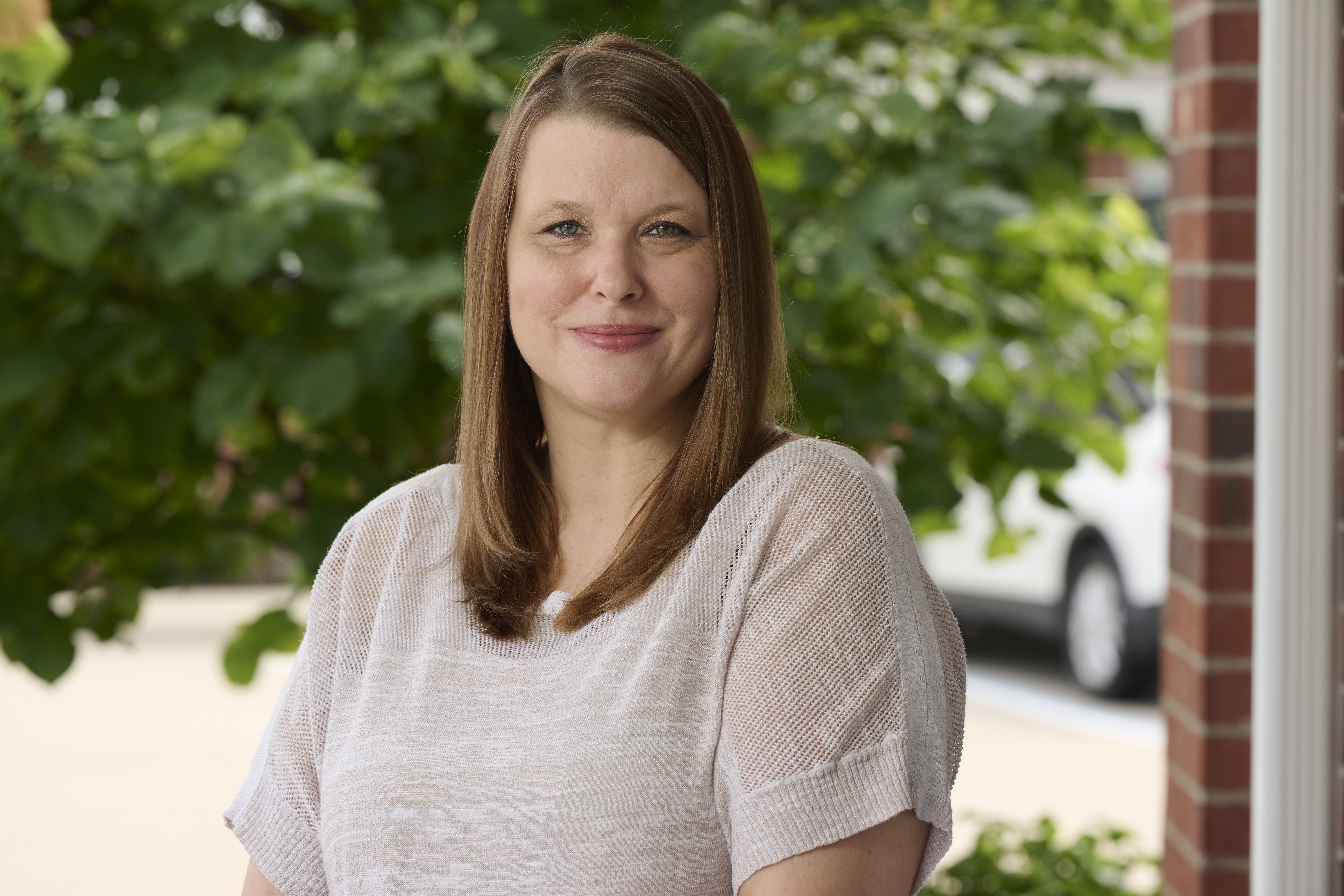
Monica McCloud thought her anxiety would kick in any second.
That afternoon, she was in the garage talking to her boyfriend, Josh, and stepson, Owen, when she felt a strange sensation rush over her. Monica, who has generalized anxiety disorder, thought she was in the early stages of a panic attack.
But it never came. Seconds later, she was hunched over, unable to feel her right arm. Her face began to droop. Panic wasn’t the problem—something else much worse was happening to Monica.
“Owen yelled, ‘Dad, she’s having a stroke! Call 911,’” Monica recalls.
Next, Owen instructed his brother to run next door to the fire station. Owen’s urgency is a big reason Monica, 43, is able to tell her story now.
Within 35 minutes of the stroke diagnosis, Monica was rushed to Barnes-Jewish St. Peters Hospital and given a CT scan. Monica had an ischemic stroke, a condition in which a blood clot blocks an artery in the brain, stopping blood from flowing to the brain.
After assessing Monica’s condition, the care team decided to treat her with a tenecteplase shot, also known as TNK, which helps break down blood clots. Originally designed to treat heart attacks, the treatment is also administered to people who experience ischemic strokes.
Less than 90 minutes after the EMS arrived and 50 minutes after arriving at Barnes-Jewish St. Peters Hospital, Monica received the TNK shot.
Monica’s memory faded in and out during that afternoon’s events, but things began to clear up for her once the medication took effect. She consoled her two younger children—her daughter Gracie and her son Roman— when they visited. After the shot, she started to feel more like herself and was able to pass a test that assessed her ability to swallow.
Monica was cleared to go home two days later and returned to work the following week. Scans that day and in the ensuing weeks didn't uncover the cause of her stroke, though it didn't leave her with any lasting physical limitations.
“I have a bit of post-traumatic stress disorder because I had a stroke out of nowhere, and now I don’t know when it can happen again,” she says.
Monica is thankful for the proactive approach taken by her family and the care team at Barnes-Jewish St. Peters.
“I remember the EMTs letting us know that it’s very important when stroke signs and symptoms begin to appear that you don’t put the person in the car or go to urgent care because they might not have the TNK shot,” Monica remembers.
Instead, call 911 immediately. Monica says, “The best-case scenario is they find out you aren’t having a stroke but know the signs and symptoms.”
For stroke treatment, faster is better
Recognizing the symptoms of a stroke is the first step to getting quick care and avoiding long-term effects. One study found that patients who are treated within an hour of a stroke’s onset are 60% more likely to have little to no disability three months later.
The B.E. F.A.S.T. method provides a helpful set of red flags that can indicate when you or someone you love is in the early stages of a stroke. Pay attention to these signs:
Balance: The person’s balance has gotten worse. Ask them to take a few steps and see see if they’re walking it differently.
Eyes: The person can’t see out of both eyes. Ask the person what they can see and if their vision is getting blurry or they’re seeing double.
Face: The person’s face looks uneven, or it looks like it’s drooping. Test this by asking them to smile.
Arms: The arms are suddenly weak or numb. See if the same arm and leg can be lifted at the same time.
Speech: Verbal skills are deteriorating. Ask simple questions to see if they’re confused or understanding you clearly.
Time to call 911: If one or more of these symptoms occurs, call 911.
Relevant News
Patient Story
Gastric Sleeve Surgery Helped a Mom Say Yes Again
Patient Story
A Trusted Doctor, a Mammogram, and Care That Stayed Connected
Patient Story
Old Friends Lean On One Another Through High-Risk Pregnancies
Patient Story
A Pregnancy Journey Built on Intention
News
St. Louis Magazine: How BJC’s Telestroke Program Is Helping Missouri Stroke Patients Get Faster Treatment
Patient Story