Allies in the Pregnancy Journey
Going into a high-risk, twin pregnancy, Casey was balancing feelings of excitement with anxiety. The advanced, collaborative expertise of WashU Medicine physicians at BJC HealthCare gave her the peace of mind she needed.
5 minutes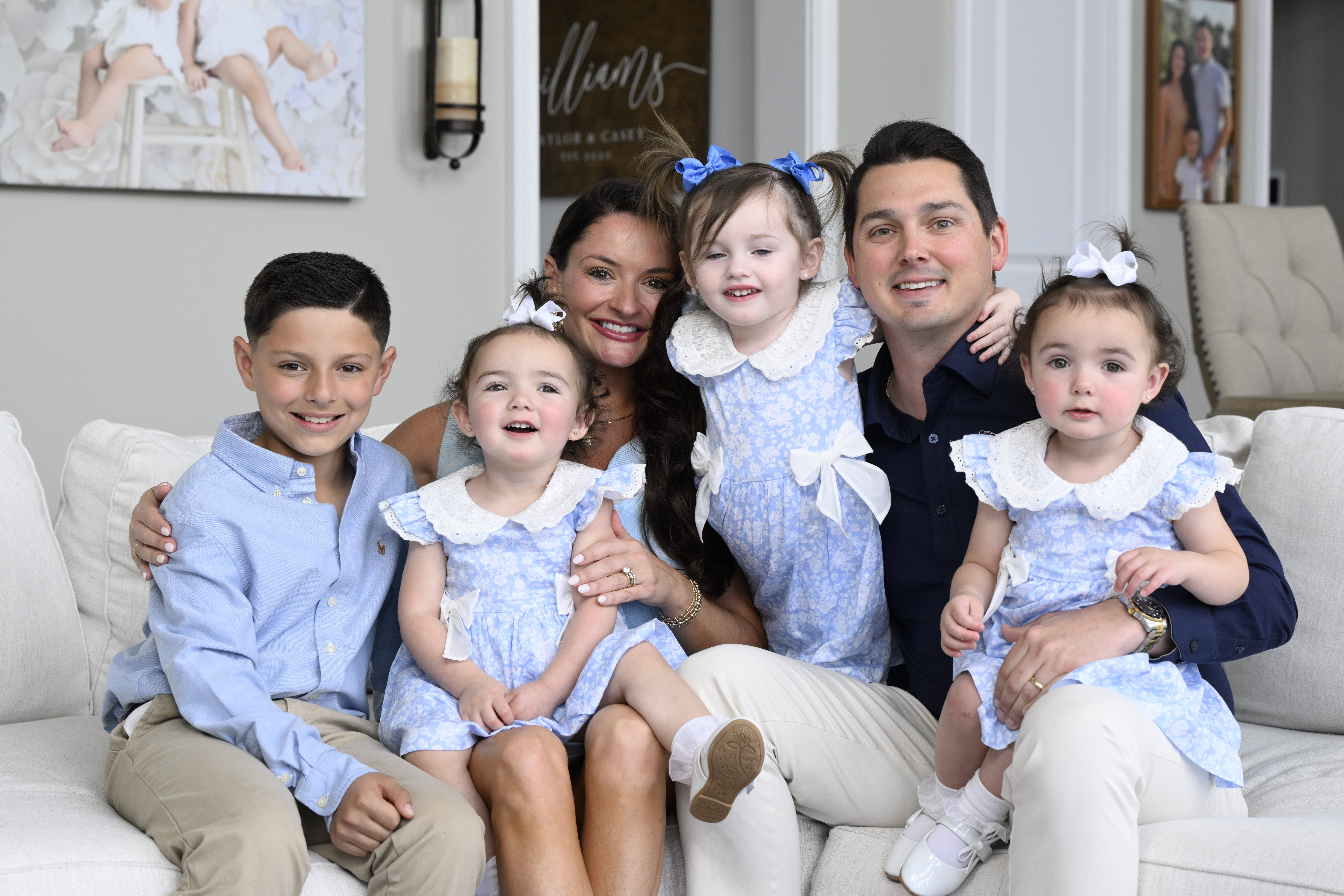
Relief. Gratitude. Joy.
Those were the emotions Casey felt holding her newly adopted daughter, Isabella. The dream Casey and her husband, Taylor, shared of growing their family finally came true. But the good news didn’t stop there for the couple. Minutes after officially adopting Isabella, the Cape Girardeau, Missouri-based couple got more good news. After multiple attempts at in-vitro fertilization (IVF), they found out the final round was successful, and she would later learn she was pregnant with twins.
Casey was elated, but she soon felt anxious. Past disappointments had turned into present doubts about what this pregnancy would entail. But the WashU Medicine maternal-fetal medicine specialists at Barnes-Jewish Hospital stepped into ease those concerns and put together a care plan for Casey and her babies.
Never alone
Casey learned that her twins were monochorionic-diamniotic (mono-di), meaning each baby had its own gestational sac but shared a placenta.
The mono-di pregnancy posed a risk that prompted Casey’s OB-GYN to refer her to Jeannie Kelly, MD, MS. Dr. Kelly is a WashU Medicine OB-GYN and maternal-fetal medicine specialist, an OB-GYN who specializes in diagnosing, treating, and supporting high-risk pregnancies. WashU Medicine maternal-fetal medicine specialists care for more than 1,000 high-risk pregnancies a year, providing advanced care for patients with complex medical, surgical, and pregnancy-related conditions.
Casey shared the struggle she and Taylor had in growing their family—four unsuccessful rounds of IVF, three miscarriages, an adoption that fell through at the last minute—and how this pregnancy might impact Isabella and their oldest child, Lorenzo.
“I told them that I’m really scared because I have babies at home who depend on me, and I have to still be able to care for them,” Casey recalls. “Dr. Kelly let me know that she and her team were going to be here for me every step of the way.”
One team, a wealth of advanced experience
Dr. Kelly and nurse Danielle Turnbull, WHNP, BSN, built biweekly appointments into the care plan. One thing Dr. Kelly’s team wanted to keep an eye on with Casey was the potential for twin-to-twin transfusion syndrome (TTTS), a condition in which one baby might receive more of the nutrient and blood flow from the placenta than the other.
TTTS occurs in about 10–15% of mono-di pregnancies due to unequal sharing of the placenta. The condition can result in unequal fluid in each baby’s sac, or abnormal blood flow in their umbilical cords. In severe cases, it can cause heart failure and stillbirth. The Fetal Care Center, a collaboration among Barnes-Jewish Hospital, WashU Medicine, and St. Louis Children’s Hospital, is the only center in the region capable of performing a minimally invasive laser surgery to help correct the imbalance while the fetuses are in the womb. In addition to TTTS, the team at the Fetal Care Center offers helps families navigate high-risk pregnancies and other complex fetal conditions. They take a comprehensive approach to care, from diagnosing conditions to determining the safest, least-invasive treatment options to helping families manage pregnancy all the way up to delivery day.
With how unpredictable TTTS is, Dr. Kelly and her team worked to create an evidence-based care plan that made the most sense for Casey’s needs and her birth plan.
“We personalize treatment plans for each patient and family, and we make decisions together to help guide them through the pregnancy,” Dr. Kelly says. “Additionally, access to St. Louis Children’s Level IV newborn intensive care unit (NICU) provides the highest level of care in the region, so we’re fully prepared to support families and their babies at every turn.”
The regular check-ins showed that both babies were growing at a healthy rate, meaning the procedure wasn’t needed. But the appointments did reveal something else to Casey’s care team. At her 20-week scan, Casey was diagnosed with placenta previa, a condition in which the placenta partially covers the cervix and the baby’s exit path during delivery.
Just around the corner
The first sign of placenta previa is bleeding, though Dr. Kelly notes that an ultrasound can detect the condition before bleeding starts.
“Having placenta previa puts mothers and babies at high risk for complications, especially if they go into labor not knowing that their cervix is covered by a placenta,” Dr. Kelly says. “Diagnosing it early and accurately and following it to delivery is important because we never want someone to labor if it is still present at that time, and we never want to perform a cesarean section unnecessarily on someone if it has resolved.”
Casey moved from her home in Cape Girardeau to St. Louis and stayed with her grandmother for the final months of her pregnancy. The relocation allowed her to be minutes away from Dr. Kelly and the team, making it easy to get to appointments and giving her the comfort of having her care team close by.
Right before she reached her 35th week of pregnancy, Casey woke up not feeling right. She canceled her regular appointment and went straight to Barnes-Jewish. Her intuition was spot on—she was in labor having contractions, and she was walked back to the operating room within minutes of her arrival.
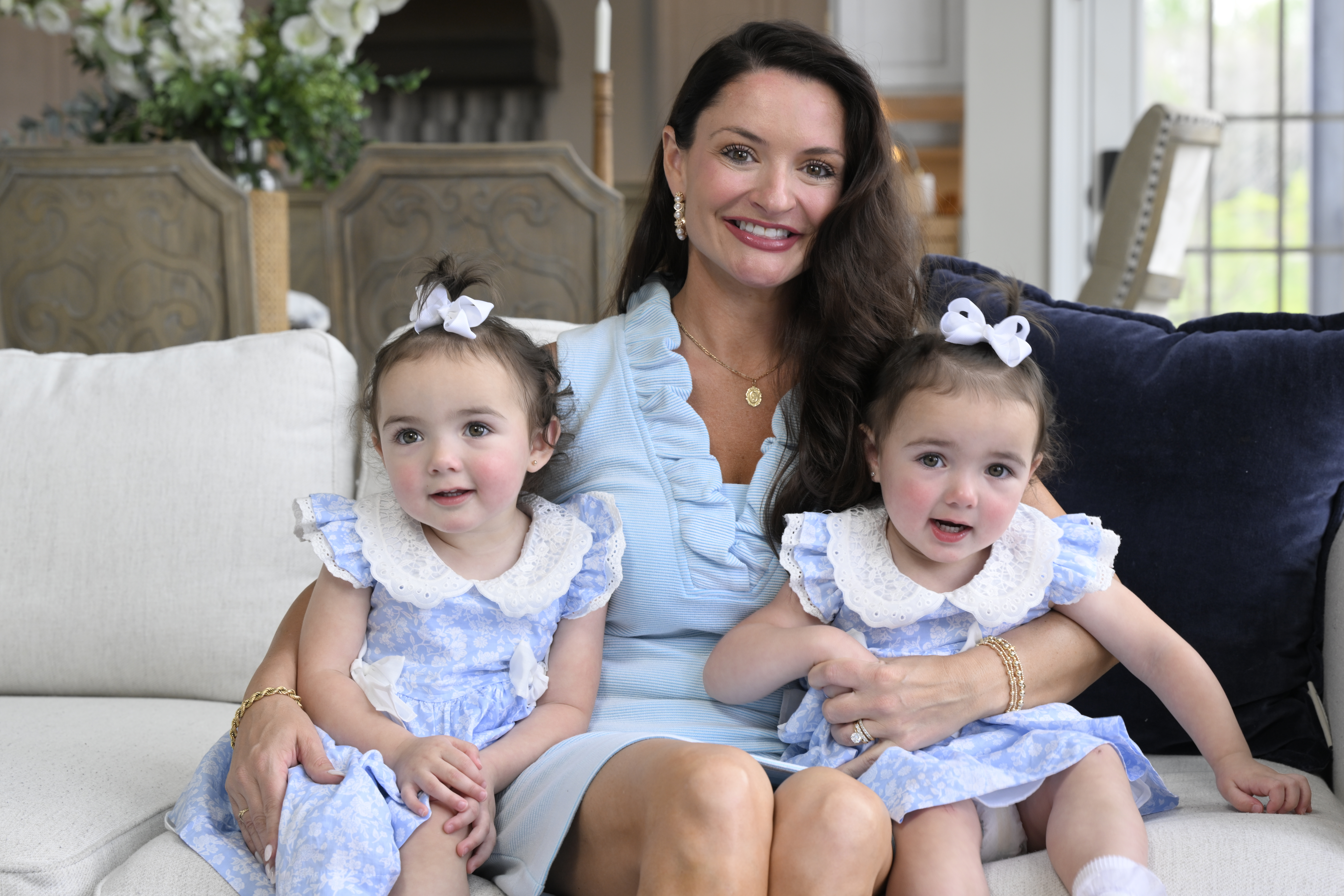
On May 16, 2024, Casey delivered identical baby girls—Sophia and Lilliana—born at 5 and 4 pounds, respectively. Both girls struggled with bottle-feeding, so they each spent almost two weeks at St. Louis Children’s NICU to get extra help with feeding and monitor growth.
The NICU is connected to Barnes-Jewish Hospital and does more than provide the best care for newborns. For new moms like Casey who have had complex pregnancies, a walkway between the buildings allows parents to be near their babies during those precious initial hours.
The girls became known as the “overachievers” in the unit because of how quickly they progressed. Sophia left the NICU after 12 days, and Lillianna went home a day later. Now two years old, the twins are bonding with their siblings and living a healthy and happy life.
And Casey is grateful for every part the BJC HealthCare and WashU Medicine teams played in making it possible.
“My care team was always 12 steps ahead and so prepared for anything,” Casey says. “Knowing they were prepared meant they would never just be reacting in the moment, which is what sets them apart—the detail in every plan for every possible situation is unmatched.”
Maternal-fetal medicine specialists are obstetrician-gynecologists who have specialized expertise in diagnosing and treating pregnancy complications and fetal conditions. Learn more about the Fetal Care Center and high-risk pregnancy expertise from WashU Medicine physicians at Barnes-Jewish Hospital.
Relevant News
Patient Story
Gastric Sleeve Surgery Helped a Mom Say Yes Again
Patient Story
A Trusted Doctor, a Mammogram, and Care That Stayed Connected
Patient Story
Old Friends Lean On One Another Through High-Risk Pregnancies
Patient Story
A Pregnancy Journey Built on Intention
Patient Story
Treating MS is Personal for Dr. Jameson Holloman
Patient Story