From Nurse to Patient: How a Rare Heart Condition Changed Abigail Ellis’ Life
A 22-year-old cardiac nurse discovered that the care she gave would soon be the care she needed.
5 minutes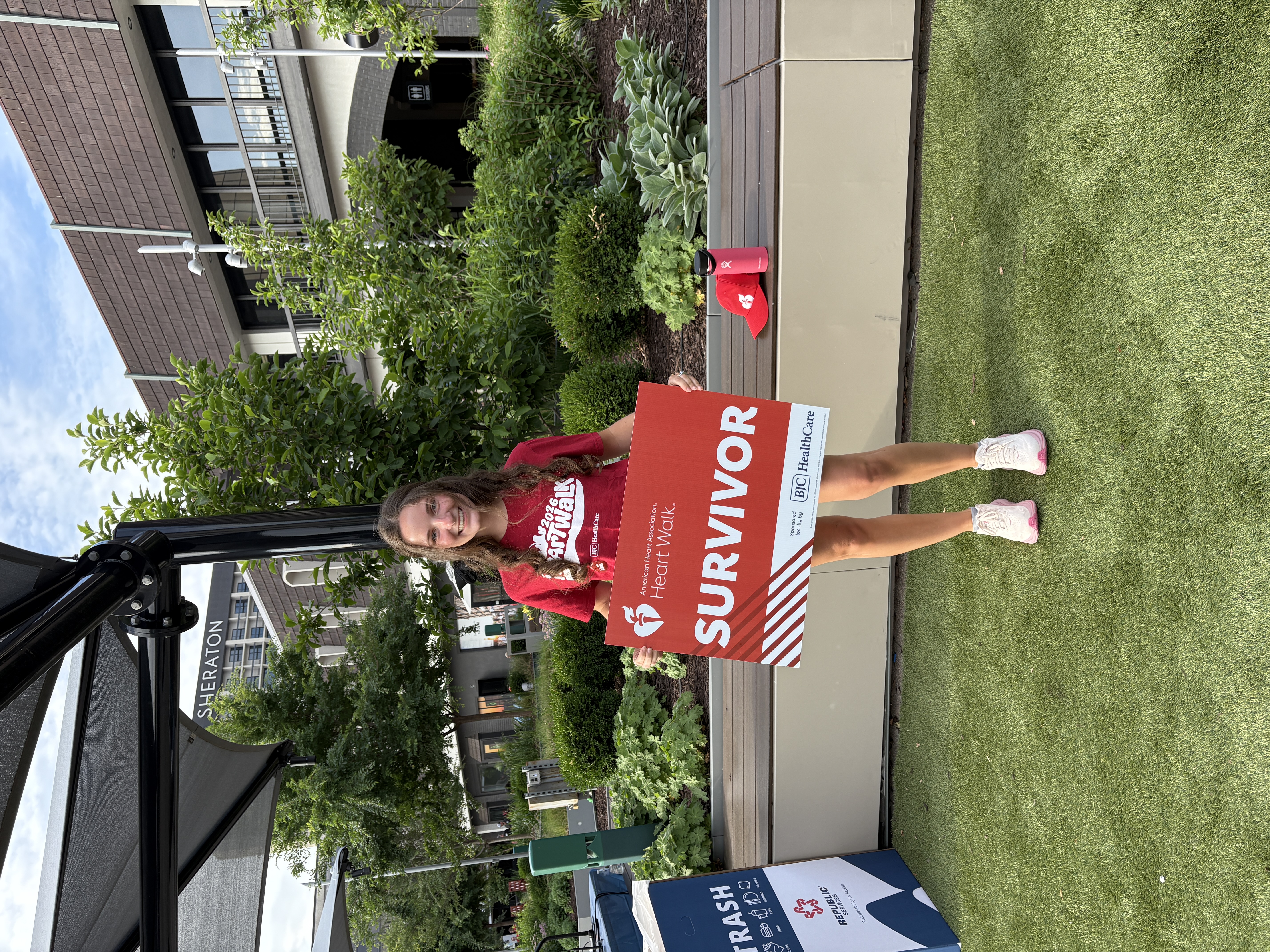 When Abigail Ellis began working as a cardiothoracic surgery nurse at Barnes-Jewish Hospital, she was beginning the career she had trained for—helping patients recover from complex heart procedures.
She never expected to become one of them.
In early 2025, Abigail began experiencing chest pain, shortness of breath, and fatigue. At the time, she was finishing nursing school and assumed stress and anxiety were to blame.
After graduation, she started her nursing career at Barnes-Jewish. But the symptoms continued, especially during exercise.
When symptoms could no longer be ignored
Everything changed near the end of November 2025. While working, Abigail felt severe chest pain throughout the day. By the time she arrived home, her arm had gone numb and she was short of breath.
She went to a local Emergency Department near her home in Edwardsville, Illinois, and was transferred to Barnes-Jewish Hospital for further evaluation and extensive testing. Physicians at Barnes-Jewish use advanced imaging technology and the expertise of a multidisciplinary team of specialists to help diagnose heart disease.
Abigail was diagnosed with a rare congenital heart defect—an anomalous right coronary artery—a condition she had unknowingly lived with her entire life. One of the arteries supplying blood to her heart originated from the wrong side and was compressed among other major blood vessels, limiting blood flow and requiring surgery.
Looking back, the warning signs had been there for years.
She often needed a lot of sleep, struggled with endurance, and sometimes felt chest pain discomfort while swimming or dancing.
“It was a relief to finally have an answer,” Abigail says.
A rare condition required specialized, coordinated care
Because anomalous coronary artery conditions are congenital in nature, Abigail’s physicians coordinated care within the BJC HealthCare system between Barnes-Jewish Hospital and St. Louis Children’s Hospital, including WashU Medicine congenital heart specialists with advanced training in treating pediatric and adult patients.
Patients with congenital heart disease do not always fit the expected profile for serious cardiac conditions. Abigail was young and healthy, without traditional risk factors for coronary artery disease. Congenital coronary artery anomalies can present in ways that do not always follow typical patterns of heart disease symptoms, highlighting the importance of care at a high-volume hospital with specialists experienced in treating complex congenital heart conditions.
WashU Medicine physicians at St. Louis Children’s and Barnes-Jewish provide specialized congenital heart disease care for patients ranging from infancy through adulthood. Patients benefit from seamless care across every stage of life. The team’s depth of expertise and experience treating complex and rare congenital heart conditions helps ensure accurate diagnoses and individualized treatment plans, even with complex congenital heart conditions.
Although Abigail was 22—beyond the traditional pediatric age range—her condition made her an appropriate fit for care through the St. Louis Children’s and WashU Medicine Heart Center.
Her surgery was performed by WashU Medicine pediatric cardiothoracic surgeons Jacob Miller, MD, and Pirooz Eghtesady, MD, who repositioned the right coronary artery to restore healthy blood flow.
“Even though everything happened so quickly, I never questioned that I was exactly where I needed to be,” Abigail says. “My surgeons and care team took exceptional care of me.”
Follow-up testing a few months after surgery showed normal coronary blood flow, and Abigail’s MRI confirmed that her heart function was strong following her surgery.
“Abigail’s case highlights how important it is to recognize symptoms that may initially seem nonspecific, especially in younger patients with congenital heart conditions,” says Dr. Miller. “Our goal was to restore normal blood flow to her heart so she could return to a healthy and active life—and we achieved that.”
Recovery from patient back to nurse
After surgery, Abigail spent six weeks recovering at home under strict lifting and activity restrictions, followed by 12 weeks of cardiac rehabilitation. Three mornings a week, she focused on rebuilding her strength, endurance, and confidence through supervised exercise.
Slowly, Abigail returned to work at Barnes-Jewish, first in a limited capacity, then gradually increasing her hours until she was back full-time caring for patients on the same unit where she once recovered.
“It was definitely different being the patient,” Abigail says. “I knew what was happening clinically, but I had to learn how to let others take care of me.”
“Congenital coronary anomalies require highly individualized care and careful surgical planning, says Dr. Eghtesady. “Abigail did exceptionally well, and it has been rewarding to see her recover and return to caring for patients herself.”
A new perspective on care
As a nurse, Abigail was used to helping others heal. Becoming the patient gave her a new perspective.
“It changed how I care for patients,” she says. “I understand what patients are feeling in a way I never could before.”
She remembers the kindness of her care team, her coworkers who visited her in the hospital, the support of her parents and twin sister, and the encouragement that helped carry her through recovery.
“I have the best people around me,” she says. “My family and coworkers were incredible. There was always someone checking in on me. I felt so supported the entire time.”
Back to doing what she loves
Today, Abigail is fully cleared for activity and has returned to running and recreational sports, something she once struggled with.
“I have energy I didn’t realize I was missing,” she says. “I don’t take that for granted anymore.”
Abigail will continue follow-up care with WashU Medicine cardiologist Rebecca Hartog, MD, who specializes in congenital heart disease care for patients ranging from pediatric to adult ages. Abigail remains focused on both her health and her nursing career.
For Abigail, the experience has come full circle—from caregiver to patient and back again—with a deeper understanding of both.
Learn more about adult congenital heart disease and the transition of care from St. Louis Children's Hospital to Barnes-Jewish Hospital.
Relevant News
News
KMOV: St. Louis Nurse Reflects on Daughter’s Premature Birth During NICU Awareness Month
News
BJC HealthCare and WashU Medicine to Open New Center for Advanced Medicine in Sunset Hills
Patient Story
Gastric Sleeve Surgery Helped a Mom Say Yes Again
News
KMOV: Teen Takes First Swim of Summer After Heart Transplant
News
St. Louis Children's Hospital Again Ranked No. 1 Children's Hospital in Missouri and St. Louis by U.S. News & World Report
Patient Story