Finding Relief from Phantom Limb Pain with Spinal Cord Stimulation
After a below-the-knee amputation, Jodi Evans experienced severe phantom limb pain that disrupted her sleep and daily life. A spinal cord stimulator helped reduce the pain, allowing her to rest and regain independence.
 For Jodi Evans, nights were the hardest.
After losing her right leg below the knee to a bone infection called osteomyelitis, Jodi began experiencing intense phantom limb pain—sensations that feel like they are coming from the missing limb—that often struck suddenly in the middle of the night.
“It felt like bolts of lightning shooting through my leg,” Jodi says. “It would wake me up throughout the night. I was only getting about four hours of sleep, and I was exhausted.”
The pain also made driving difficult and unpredictable. The shocks could hit at any moment, making it hard to feel in control behind the wheel.
Searching for relief
After her leg amputation, Jodi, who lives in a small town north of Hannibal, Missouri, tried several treatments to control the phantom limb pain. One was targeted muscle reinnervation (TMR). This surgical procedure reroutes nerves to new muscle targets to help reduce pain in some amputees. Jodi’s shocking sensations persisted.
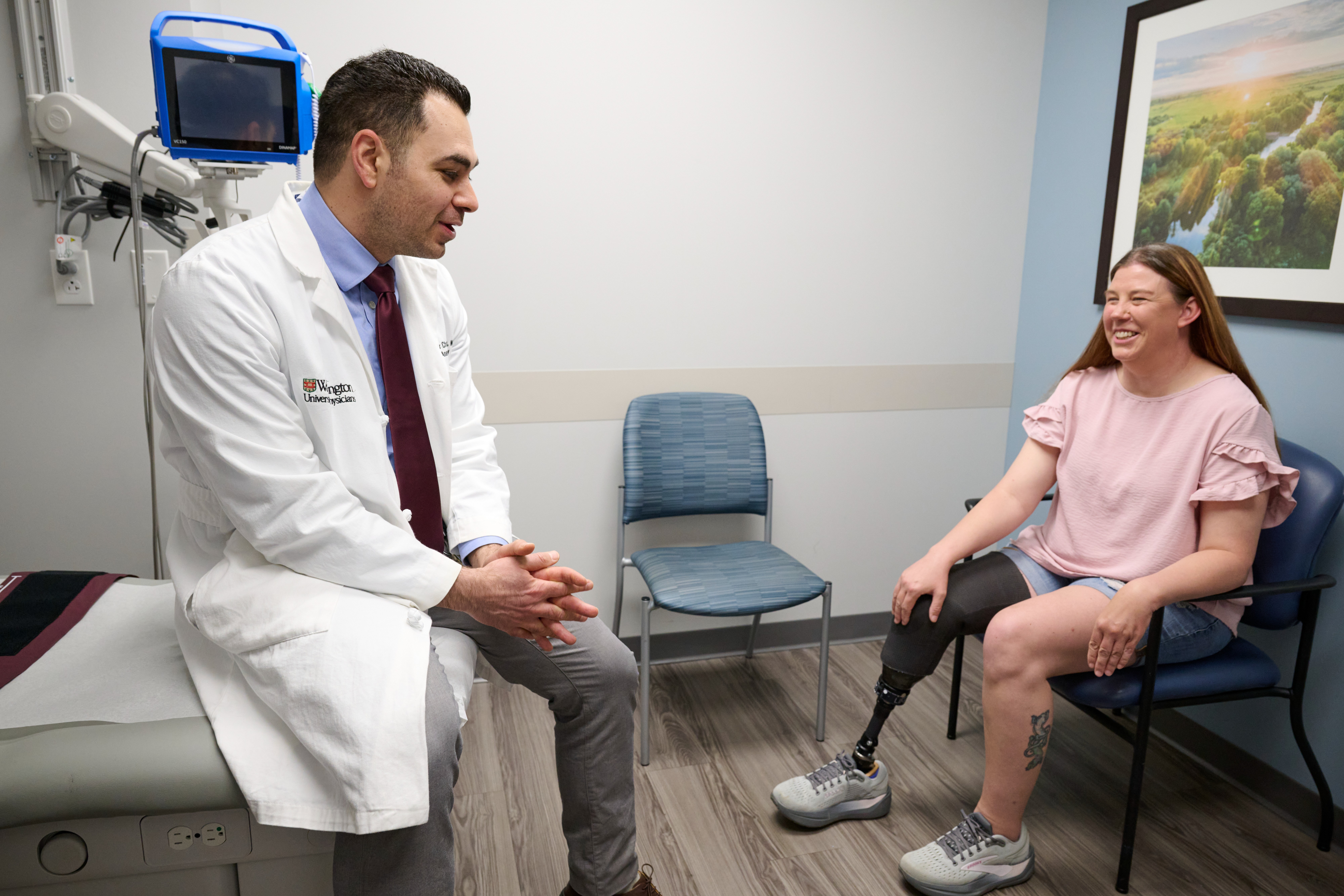
Jodi’s orthopedic surgeon near her home referred her to WashU Medicine pain management specialist Alexander Chamessian, MD, at Barnes-Jewish West County Hospital, who told her there was another option: spinal cord stimulation.
“Many amputees don’t realize there are effective treatments available for phantom limb pain,” Dr. Chamessian says. “Spinal cord stimulation can significantly reduce pain and help patients return to normal activities.”
While spinal cord stimulation is widely used for several chronic pain conditions, including back pain, diabetic neuropathy, and other nerve-related pain, it’s shown to be a promising option for phantom limb pain.
How a spinal cord stimulator works
A spinal cord stimulator is a small, implanted device that sends mild electrical impulses to the spinal cord to help disrupt pain signals before they reach the brain.
The wires are placed near the spinal cord, while a small battery-powered generator is implanted under the skin, often in the back or hip area.
The therapy is usually tested first through a temporary trial period. For Jodi’s one-week trial, Dr. Chamessian placed a spinal cord stimulator connected to a battery worn outside her body to see if it would relieve her phantom limb pain.
“The difference was almost immediate,” Jodi says. “For the first time in a long time, I slept six to eight hours a night.”
Because the trial worked so well, a permanent device was implanted during an outpatient procedure. The battery pack sits under the skin near Jodi’s right kidney and thin wires placed along her spine deliver targeted pain relief. The battery typically lasts about 10 years before it needs to be replaced.
Life with less pain
Jodi’s phantom limb pain is about 95% gone. The greatest improvements have come in the everyday essentials she missed the most—sleeping through the night and driving.
“The pain took both away,” Jodi says. “Now I can do them again.”
“Dr. Chamessian was phenomenal,” Jodi continues. “He listened to me, answered my questions, and was incredibly helpful and understanding. Everyone at Barnes-Jewish West County Hospital took exceptional care of me.”
“Phantom limb pain can impact daily life,” Dr. Chamessian says. “But patients should know they don’t have to live with it. Treatments exist that can make a meaningful difference.”
Learn more about pain management at Barnes-Jewish West County or to schedule an appointment, call 314-542-9378.
Relevant News
Patient Story
Gastric Sleeve Surgery Helped a Mom Say Yes Again
Patient Story
A Trusted Doctor, a Mammogram, and Care That Stayed Connected
Patient Story
Old Friends Lean On One Another Through High-Risk Pregnancies
Patient Story
A Pregnancy Journey Built on Intention
Patient Story
Treating MS is Personal for Dr. Jameson Holloman
Patient Story