Three Stents, One Procedure: Progress West Hospital Cardiologist Prevents Long‑Term Heart Damage
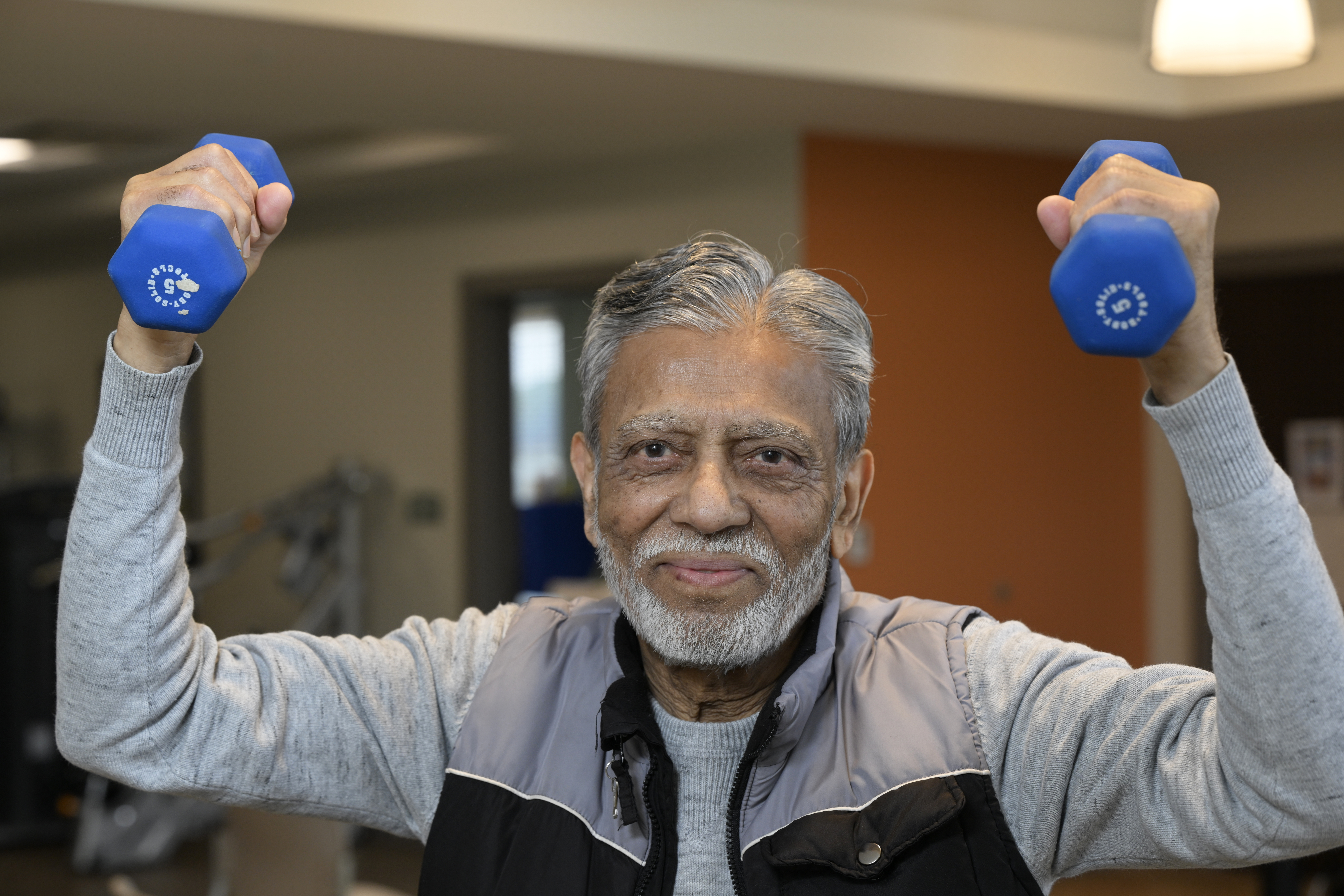
During frequent traveling from March–December 2025, Khalid Siddiqui, 75, of Suwanee, Georgia, experienced chest pain and difficulty breathing that came and went. During visits with family in Toronto, Canada, and later in St. Louis, he assumed the discomfort was caused by cold temperatures and the physical strain of travel.
“Most of the time, my chest pain happened when I was walking or when it was cold outside,” Khalid says. “Since I was traveling and visiting relatives, I thought I was stressing myself out and getting tired.”
When the pain worsened one morning, Khalid decided to go to the Emergency Department at Progress West Hospital, part of BJC HealthCare. There, he was diagnosed with a non-ST elevation myocardial infarction (NSTEMI)—a type of heart attack caused by partially blocked coronary arteries.
Because an NSTEMI can lead to serious and life‑threatening complications if left untreated, including further heart damage and stroke, doctors recommended Khalid remain hospitalized for monitoring and additional testing. He underwent heart catheterization, a diagnostic procedure that allows physicians to examine blood flow through the heart and its arteries.
“I trust when I go to the doctor. I give myself up because they’re experts and they know this stuff,” Khalid says. “I don’t worry myself or preoccupy myself thinking about ‘What’s going to happen, and then what will I do?’ I just sit tight and see what happens.”
The catheterization, performed by Sanjaya Saheta, MD, an interventional cardiologist at Progress West, revealed the need for further intervention. Whether a patient has a common heart concern or needs advanced care, Progress West offers a range of treatment options. Khalid was referred to David Kardesch, MD, a BJC Medical Group interventional cardiologist, who placed three stents in Khalid’s arteries. Stents are tiny tubes placed in blocked blood vessels to keep them open, which helps blood flow easily again. Stents are typically used in the heart but can also be used in other blood vessels or ducts.
Khalid’s recovery
Khalid was discharged on Jan. 2. He followed up with a nurse practitioner in Dr. Kardesch’s office and is back to doing something he loves—walking. He takes a 5–10 minute walk every day. Outside of walking, he exercises at a senior living facility close to Progress West with fellow seniors.
“We do exercises for 20 minutes, then take a 15-minute break and do another 20 minutes,” Khalid says.
Today, Khalid remains in St. Louis while continuing his recovery and awaiting medical clearance to return to Georgia. If his progress continues, he will be back home in Georgia this summer.
Khalid was so impressed with the care and treatment he received at Progress West that he awarded his care team with trophies. “The care I received at Progress West felt different from care I’ve received at other hospitals,” Khalid says. “You can tell they provide care from the heart, and they were all down-to-earth, caring people.”
Dr. Kardesch’s health tips to prevent NSTEMI:
If you notice symptoms, call your primary care physician or visit the Emergency Department to identify problems early.
- Pay attention to your body when you start feeling persistent pains.
- Go to the doctor regularly.
- Make sure your blood pressure is controlled.
- Get your cholesterol checked once a year.
- If you’re diabetic, make sure your diabetes is properly treated.
Eat a mostly plant-based or a Mediterranean diet, including whole foods, fruits, and vegetables.
“Even if you don’t have heart disease, those are really healthy things to adopt,” Dr. Kardesch says. "Once you have heart disease like Khalid, it is important to make lifestyle changes.”
If you are experiencing chest pain, go to your nearest Emergency Department.
Learn more about when to see a cardiologist and why you should choose BJC.
Relevant News
Patient Story
Gastric Sleeve Surgery Helped a Mom Say Yes Again
Patient Story
A Trusted Doctor, a Mammogram, and Care That Stayed Connected
Patient Story
Old Friends Lean On One Another Through High-Risk Pregnancies
Patient Story
A Pregnancy Journey Built on Intention
Patient Story
Treating MS is Personal for Dr. Jameson Holloman
Patient Story