Getting Back on Your Feet: New Advances in Total Ankle Replacement
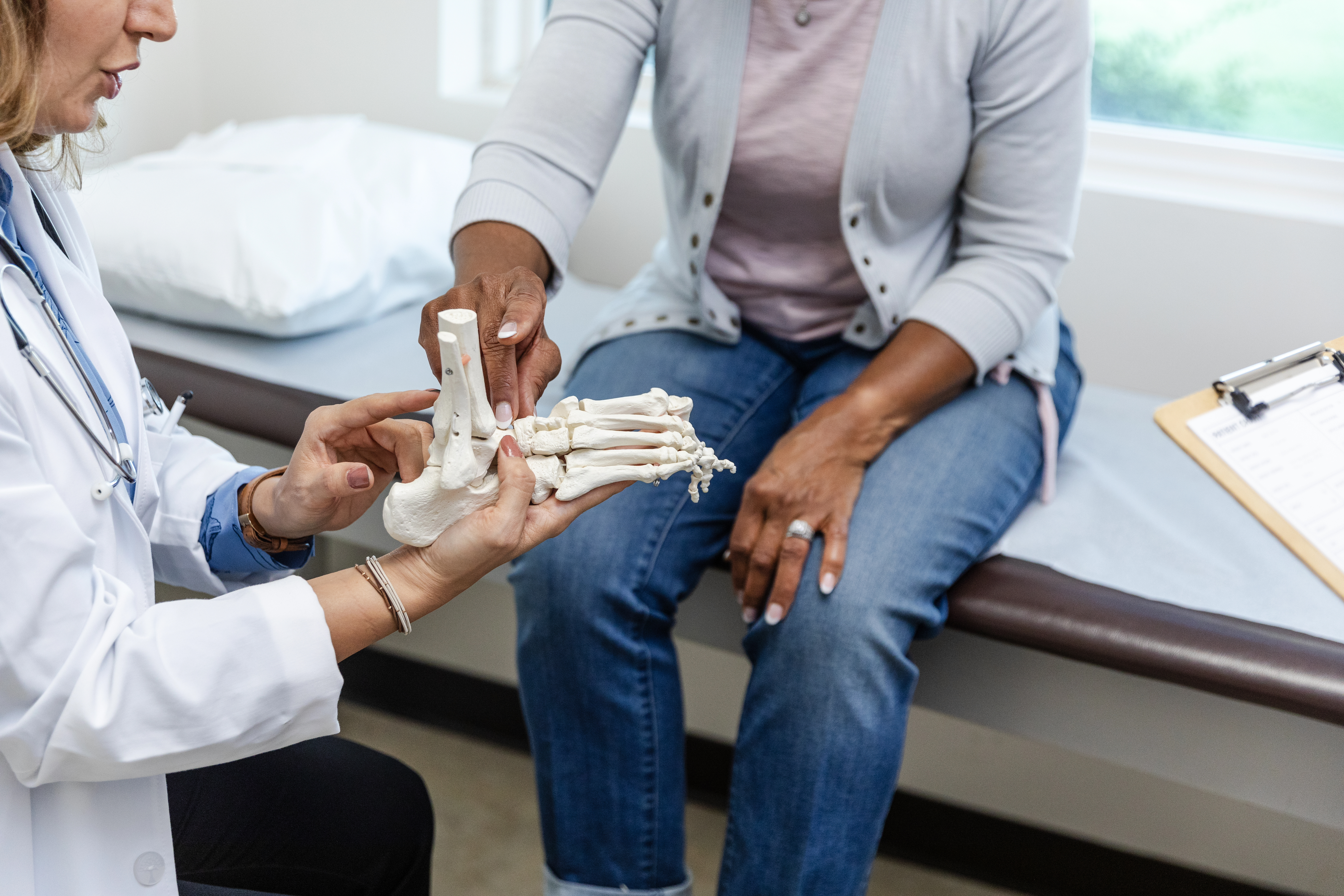 At Barnes-Jewish Hospital and Barnes-Jewish West County Hospital, WashU Medicine orthopedic surgeon Kelly Hynes, MD, and her colleagues use advanced tools to make ankle replacement surgery more precise and personalized. They perform more of these surgeries than any other program in the region. They also treat many complex cases. Their experience helps patients move more easily, feel less pain, and return to daily life.
Each patient’s care is based on the latest research. When standard treatments are not enough, WashU Medicine physicians go a step further, using the expertise of world-renowned specialists who lead their fields and take on the most complex cases.
Ankle replacement surgery may help patients with ankle arthritis. This condition is often caused by past injuries, not just aging. This type of arthritis can make walking painful and limit everyday activities.
“For the right patient, ankle replacement can reduce pain and restore more comfortable, confident walking,” Dr. Hynes says.
During total ankle replacement, the damaged ankle joint is replaced with an artificial one. Surgeons remove the worn cartilage and reshape the ends of the bones that form the joint. Metal parts are placed on the bone surfaces with a plastic spacer between them that allows the joint to move smoothly and helps relieve pain.
Ankle replacement is designed to treat arthritis in the ankle joint itself. If pain is coming from other joints in the foot, additional treatments may be needed.
Advances in total ankle replacement
Ankle replacements are very precise. Surgeons use advanced imaging and computer planning to match the implant to the patient’s unique ankle anatomy.
“We use custom guides created from CT scans to place the implant accurately and align it correctly,” Dr. Hynes says. “That level of planning helps the ankle move more naturally and reduces the chance of needing another surgery later.”
Today’s ankle implants are made from very strong metals and advanced medical-grade plastic, designed to reduce wear over time. As a result, modern ankle replacements are lasting longer and helping patients return to everyday activities with greater comfort and confidence.
Ideal candidates for ankle replacement
Ankle replacement is usually recommended for patients over 50 or those with arthritis from injury or other conditions. The best candidates are otherwise healthy patients with painful ankle arthritis. To safely have surgery, the patient should be in good overall health, including controlled blood sugar if they have diabetes, good blood flow to their foot, and ideally, not smoke.
Some patients may not be candidates if their ankle or foot is crooked or severely misaligned, as this can increase the risk of complications or require extra procedures.
For younger patients, ankle fusion, where the ankle bones are joined together, is sometimes a better choice. Fusion can provide long-lasting pain relief and a stable ankle, allowing patients to walk comfortably and stay active, even though ankle motion is reduced. Most patients are able to return to everyday activities with significantly less pain.
Your surgeon will help determine if replacement or fusion is best, based on your age, activity level, and the condition of your ankle.
What to expect after surgery
After surgery, most patients can walk comfortably again and enjoy less pain. Physical therapy is an important part of recovery, helping patients rebuild strength, improve flexibility, and regain balance so they can safely return to their everyday activities. High-impact activities such as running or jumping aren’t usually recommended, but most patients can return to normal daily activities.
“Every patient is different, and the solution needs to be customized for their ankle,” Dr. Hynes says. “Thanks to advances in planning, implants, and surgical techniques, ankle replacement can restore comfort and mobility for many patients with arthritis.”
Learn more about foot and ankle care or call 314-514-3500 to schedule an appointment.
Relevant News
News
BJC HealthCare and WashU Medicine to Open New Center for Advanced Medicine in Sunset Hills
Article
Are Bars and Powders Better Sources of Protein Than Whole Foods?
Article
What Healthy Older Adults Talk About at Their Annual Physical
Article
Healthy 90-Year-Olds Don’t Have a Secret. They Have These Habits.
Article
Age-Related Hearing Loss: 6 Signs You Shouldn't Ignore
Article