Can This Viral Fitness Test Really Reveal Your “Bio Age?”

You’ve probably seen the videos online: Adults in athleisure kneeling on the floor, legs slightly apart, preparing to attempt a viral fitness challenge.
The caption usually says something like: If you can jump from your knees to your feet, your biological age is under 30.
For many people, the opportunity to prove they’re as young as they feel is irresistible.
Kneeling, they look around nervously. Some kick off their shoes. Others swing their arms a few times to build momentum. Then they lock in—either springing into a deep squat triumphantly or tipping forward in a heap of laughter.
Viewers sound off in the comments.
“My knees hurt just watching this.”
“Everything hurts, but I did it.”
“I twisted my ankle doing it. How old does that make me?”
But beneath the humor is a real question: What is biological age, and can a movement challenge like this actually reveal how old your body is?
What is biological age?
If you’ve ever blown out your birthday candles and thought, “I don’t feel a day over 20,” you already understand the difference between chronological age and biological age.
Chronological age is simply the number of years you’ve been alive. Biological age is an estimate of how much wear and tear your body’s cells, tissues, and organs have accumulated over time. These changes happen naturally as we age. But it’s also influenced by chronic conditions, which we’re more likely to develop as we get older.
Genetics, lifestyle, stress, sleep, exercise, and environmental exposures can all influence how quickly the body ages. It’s why two people with the same birthday can have very different health profiles. Or why someone well into their 70s or 80s can be considered advanced in chronological age but, because they have few or no chronic diseases, younger biologically.
“One of the encouraging things about biological age is that it’s influenced by many factors people can actually improve,” says Caitlin Rogers, DO, FAAFP, a BJC Medical Group primary care physician. “While we can’t change our chronological age or genetics, healthy habits like regular exercise, quality sleep, stress management, and good nutrition can support healthier aging and help the body function more like that of a younger person.”
What can a movement challenge tell me about my health?
First, a note of caution: Attempting viral fitness challenges, especially ones that involve sudden explosive movements like the one mentioned, can lead to injury, particularly for people with joint problems, balance issues, prior injuries, or those who don’t exercise regularly.
In addition, the science of aging is still evolving, and there’s no single agreed-upon test that can definitively tell you your “true” biological age.
So, no, jumping from your knees to your feet cannot determine whether your biological age is under 30. But it can reflect several qualities associated with healthy aging, including strength, balance, coordination, mobility, and power.
Those abilities matter more than many people realize. Muscle strength and physical function are linked to long-term health outcomes, especially as we age. Strength and fitness help us prevent injuries, and ultimately, retain independence and quality of life. In one recent study of more than 5,000 women, published in JAMA Open Network, researchers found that greater grip strength was associated with a lower risk of death from any cause—even among participants who didn’t meet standard exercise recommendations.
“People get very focused on whether they can pass a viral fitness test, but as a physician, I’m much more interested in what your day-to-day function looks like,” says Dr. Rogers. “Can you get up off the floor easily? Carry groceries without difficulty? Climb stairs without becoming winded? Those are often more meaningful indicators of strength, health, and independence.”
How to build strength at any age
If the kneeling jump challenge humbled you, don’t panic.
“One thing I worry about with viral health trends is that people may feel discouraged if they can’t do them,” says Dr. Rogers. “But strength is highly trainable. You can improve mobility and muscle function at almost any age with consistent activity.”
Here are a few expert-backed ways to build strength safely and steadily:
Start with functional movements
You don’t need complicated gym equipment to get stronger. Movements that mimic everyday activities are a good place to begin, including:
- Squats or sit-to-stands from a chair
- Step-ups
- Lunges
- Wall push-ups or modified push-ups
Focus on consistency, not intensity
You don’t need exhausting workouts to make progress. Strength improves when muscles are challenged regularly over time.
Most guidelines recommend strength training at least twice a week, targeting all major muscle groups.
Progress gradually
One of the safest ways to build strength is to slowly increase resistance, repetitions, or difficulty over time.
Try:
- Adding a few repetitions
- Using slightly heavier weights
- Improving range of motion week by week
Train balance and mobility, too
Strength and stability work together. Improve coordination and reduce fall risk with exercises including:
- Single-leg stands
- Yoga
- Pilates
- Controlled core exercises
Remember that power matters
As people age, they tend to lose muscle power—the ability to generate force quickly—as they lose muscle mass.
Simple movements performed with control and speed, like standing up quickly from a chair or climbing stairs, can help maintain fitness.
Partner with your physician to improve strength
Visiting your primary care physician is an opportunity to refocus your health goals and learn how you can continue making the best decisions for your well-being. People with injuries, balance issues, chronic conditions, or long periods of inactivity may also benefit from guidance from their primary care provider before starting a new routine.
Find a BJC Medical Group primary care provider.
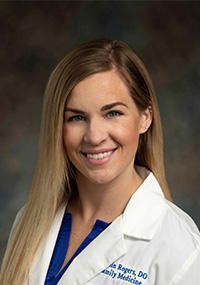
About Caitlin Rogers, DO, FAAFP
Caitlin Rogers, DO, FAAFP, is a family medicine physician and women’s health specialist who sees children (from birth), teens, and adult patients. She provides comprehensive preventive care, including annual wellness exams, well-woman exams, birth control management, and immunizations. She treats chronic conditions, such as diabetes, high blood pressure, and asthma. Dr. Rogers provides medical care for new mothers after childbirth, as well as for their newborns and siblings. She is committed to establishing a strong connection with her patients and their families and believes that health care is a collaborative effort between the provider and the patient.
Relevant News
Article
Are Bars and Powders Better Sources of Protein Than Whole Foods?
Article
What Healthy Older Adults Talk About at Their Annual Physical
Article
Healthy 90-Year-Olds Don’t Have a Secret. They Have These Habits.
Article
Age-Related Hearing Loss: 6 Signs You Shouldn't Ignore
Article
What Blue Zones Can Teach Us About Healthy Eating and Longevity
Article