Cancer Center at Missouri Baptist Medical Center
- Sunday Closed
- Monday 8 a.m. – 5 p.m.
- Tuesday 8 a.m. – 5 p.m.
- Wednesday 8 a.m. – 5 p.m.
- Thursday 8 a.m. – 5 p.m.
- Friday 8 a.m. – 5 p.m.
- Saturday Closed
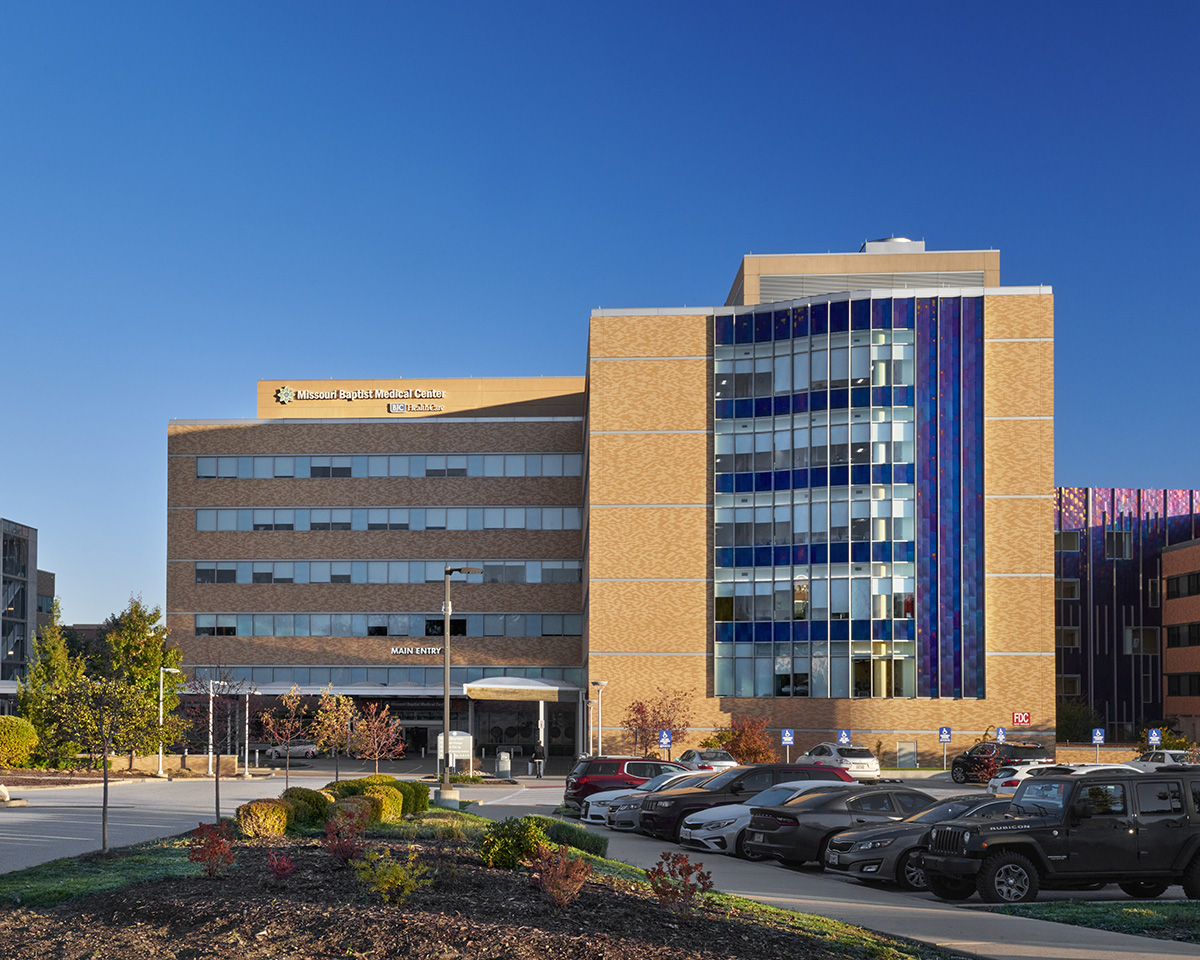
Services provided
We offer care for a range of cancer conditions. Some services at the Cancer Center include:
Genetic counseling
Why choose our cancer center?
At the Cancer Center, you can expect care from experts in hematology, medical oncology, and radiation oncology in a comfortable, welcoming environment, including:
- Expert care: Accredited by the American College of Surgeons Commission on Cancer (CoC), meaning care here follows strict protocols, care standards, and emphasizes patient-centered care.
- Multidisciplinary approach: As a part of BJC HealthCare, you have access to a team of medical experts across specialties, so you can get the right care for you—when and where you need it.
- Research and clinical trials: You will have access to leading-edge research and new treatment options through our clinical trials.
- Seamless, coordinated care: The lab and pharmacy located close by on Missouri Baptist’s ground floor mean you and your care team have access to everything you need during treatment.
- Easy scheduling: We offer flexible scheduling and multiple appointment options so you can access care according to your schedule.
- Patient-focused environment: Our on-campus healing garden is designed to be a peaceful retreat where patients and visitors can relax.
To schedule an appointment, call the Cancer Center at 314-996-5151, or to find a provider use our find a provider search tool.
Before your appointment
Here's what you need to know before your appointment:
- Bring a photo ID and your insurance
- Bring a list of any current medications or supplements
Your care team
Here, you’re never alone in your cancer care. Your dedicated care team works directly with your physician and includes:
- Nurse coordinator: Arranges your appointments for care and imaging, symptom management, refills, and other medical questions while providing support at every step.
- Oncology specialist: Delivers expert, personalized care using advanced treatments.
- Care navigator: Connects you with support services such as transportation, wig fittings, and can help with copayment assistance for some patients.
- Social worker: Helps reduce stress and improves your quality of life throughout treatment by connecting you with support groups, financial assistance, and other resources.
Lung cancer screening
The American Cancer Society recommends annual low-dose CT (LDCT) lung cancer screening for people ages 50–80 who currently smoke or previously smoked and have a 20 pack-year history.
A pack-year equals smoking one pack per day for a year—for example, one pack daily for 20 years or 2 packs daily for 10 years.
To find out more about lung cancer screening or to schedule an appointment, fill out our form or call 855-399-LUNG (5864).
Frequently asked questions
Is the Cancer Center accredited for cancer care?
The Cancer Center, as part of Missouri Baptist Medical Center, is accredited by the American College of Surgeons Commission on Cancer (CoC), meaning care here follows strict protocols, care standards, and emphasizes patient-centered care. Only around 30% of hospitals in the U.S. have this accreditation.
What kind of training do your therapists have for cancer care?
In addition to our providers’ standard medical education, our therapists have advanced certifications for cancer care, including:
- Board certification in lymphedema (CLT-LANA) through the Lymphoma Association of North America
- Head and neck cancer rehabilitation certifications
- Strength After Breast Cancer program certification
What is the goal of the Cancer Rehabilitation Program?
Named a Center of Excellence by the Physiological Oncology Rehabilitation Institute (PORi), our rehabilitation program was created to provide proactive and specialized care to improve quality of life and treatment outcomes for people with cancer. This program follows an early intervention model, meaning you can expect:
- Close collaboration with cancer specialists and breast surgeons
- Proactive identification of patients at risk of developing lymphedema after treatment
- Timely support and preventive care strategies